Pain later in the workday
Aching or fatigue that develops after sustained screen time and settles after changing activity.
 YEONSEICHIROPRACTIC & PILATES
Desk-worker guide · Neck pain
Neck stiffness or aching during computer work is common, but it is not always caused by one ‘bad’ posture. This guide explains the factors that may matter, practical changes to try and when an individual assessment may help.
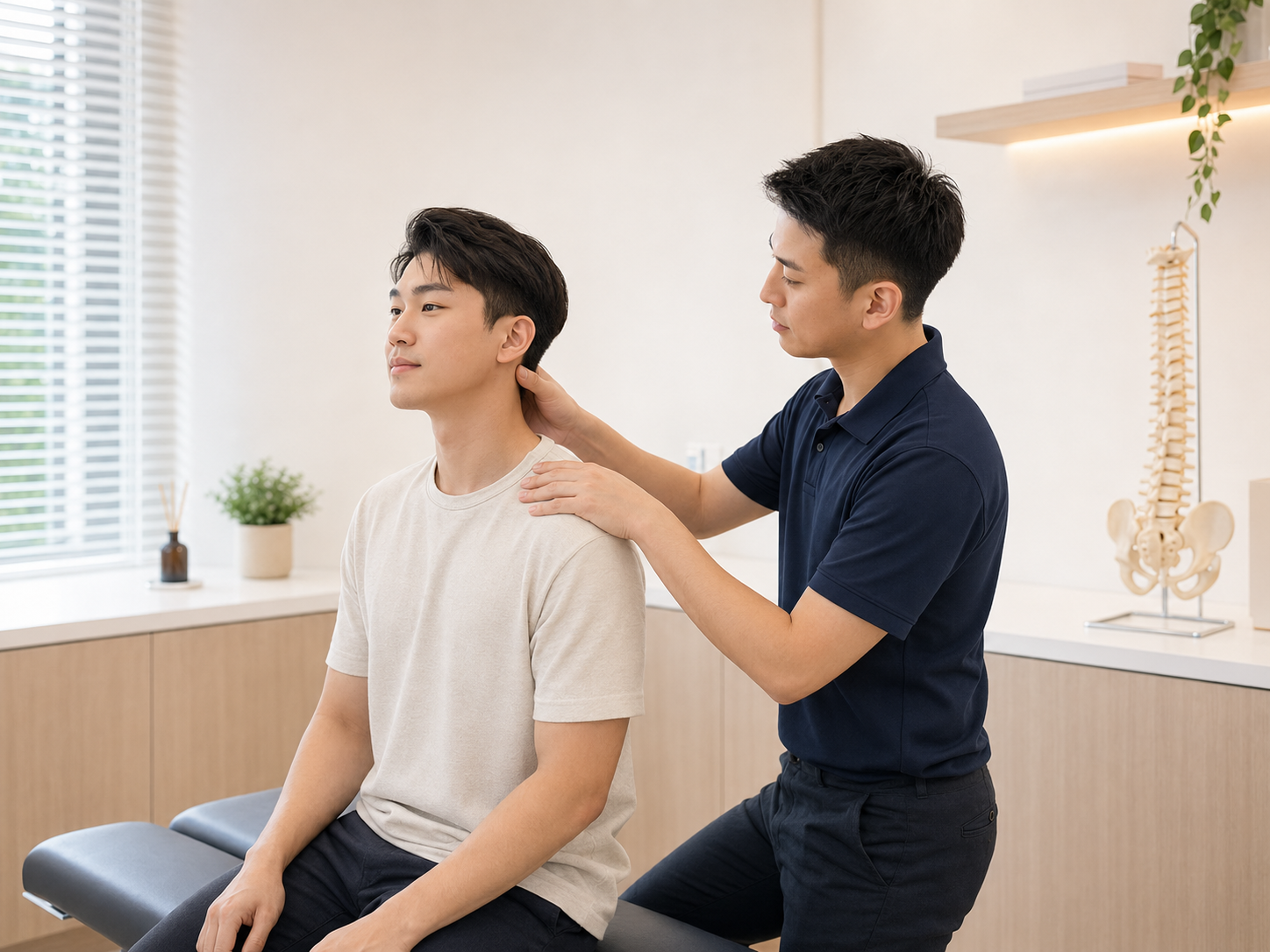
Understanding your symptoms
Symptoms can be influenced by how long you stay still, screen and laptop position, repeated phone use, work pressure, sleep, physical capacity and a pre-existing neck condition. A more useful first step is to notice when symptoms begin, which movements change them and whether pain travels into the shoulder, arm or head.
Desk-worker guides
These practical guides explain common symptom patterns, sensible workday changes and when an assessment may be appropriate.
Tension or aching between the shoulder blades during computer work.
Read the guideLower-back symptoms during sitting, commuting and standing up.
Read the guideTingling, numbness and nerve-related symptoms during desk work.
Read the guideSee the full assessment and care approach for office workers.
Read the guideReasons people book
These patterns can help describe your symptoms, but they do not identify a diagnosis by themselves.
Aching or fatigue that develops after sustained screen time and settles after changing activity.
Reduced or uncomfortable rotation when checking a blind spot, looking sideways or moving after work.
Symptoms that build when the screen is low or when looking down at a phone for long periods.
Tightness across the neck and upper shoulders during concentrated keyboard or mouse work.
Head symptoms accompanied by neck stiffness or tenderness, requiring screening because headaches have many causes.
Symptoms that settle but repeatedly return during busy work periods, commuting or long meetings.
Workday changes
General suggestions should be adapted to your symptoms, workplace and medical history.
Briefly vary sitting, standing and walking rather than trying to maintain one position for hours.
Position frequently used screens, documents and input devices so repeated reaching and prolonged downward viewing are reduced.
Take a short movement break before symptoms become intense, particularly during long meetings or focused work blocks.
Appropriate neck, shoulder and upper-back exercise may improve tolerance for work and activity over time.
Your initial appointment
Treatment is included in every initial consultation after the assessment, when clinically appropriate and with your consent.
We discuss when symptoms begin during the day, screen and laptop use, work hours, breaks, commuting, sleep, exercise, previous episodes and any headache or arm symptoms.
The examination may include neck and upper-back movement, shoulder function, relevant neurological tests, strength and tasks that reproduce your work-related symptoms.
Dr Kevin explains the findings, likely contributors and whether hands-on care, rehabilitation, workday changes, medical review or further investigation should be considered.
Every initial consultation includes treatment after the assessment. With your consent, this may include mobilisation, manipulation, soft-tissue therapy or guided exercise selected for your presentation.
Individualised care
Management may combine hands-on treatment with mobility, strengthening, pacing and practical advice about position changes. The aim is to improve function and work tolerance without claiming that one posture or technique is the answer for everyone.
Neck symptoms have different causes and responses to care. No particular outcome can be guaranteed, and medical review or referral is recommended when the presentation is outside chiropractic care.

Your chiropractor
Dr Kevin Park assesses neck, upper-back, shoulder and nerve-related symptoms in desk workers. Recommendations are individualised and may include mobilisation, manipulation, soft-tissue therapy and progressive exercise.
Meet Dr Kevin ParkFrequently asked questions
Computer work can be associated with neck symptoms, particularly when movement is limited for long periods. Screen position, workload, sleep, physical capacity and an existing neck condition may also contribute.
‘Text neck’ is a popular description rather than a specific diagnosis. Looking down may aggravate symptoms for some people, but assessment should consider the full pattern rather than assuming one posture is the cause.
A comfortable screen position can reduce unnecessary strain, but there is no single setup that suits everyone. The goal is usually to make the main task easy to view and to vary position regularly.
Some headaches occur with neck symptoms, but headaches have many possible causes. A consultation should screen for warning signs and determine whether a musculoskeletal contribution is plausible.
Pain, tingling, numbness or weakness in an arm can involve several structures and should be assessed. Progressive weakness, severe numbness or other concerning symptoms require prompt medical review.
Yes. Every initial consultation includes treatment after the history and assessment, provided with your consent and adapted to the clinical findings.
Use the Yeonsei online booking page and select Dr Kevin Park, or call the clinic on (02) 9746 0119.
General patient information: Healthdirect — neck pain · Healthdirect — posture at home and work · Safe Work Australia — sitting and standing
Book at Yeonsei
Suite 204, Level 2, Strathfield Plaza · Two minutes from Strathfield Station
View available appointments